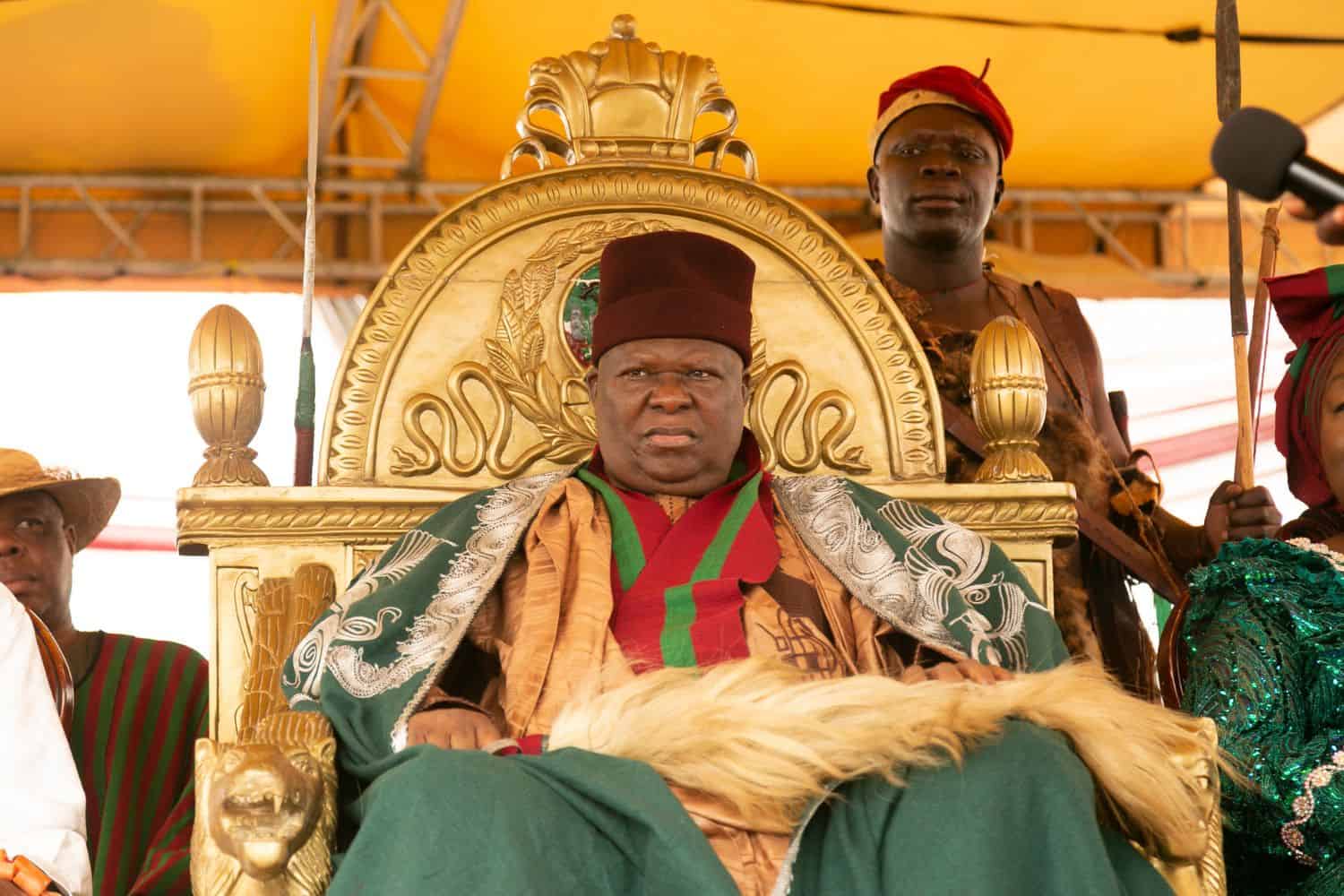
Shocking As Nigerian Crowned As King in Eastern Cape Raises Concern

The coronation of a Nigerian national as ‘Igwe Ndigbo Na East London’ in the Eastern Cape has sparked significant debate regarding sovereignty, traditional law, and the role of diaspora communities.
Traditional expert Isaac Mthethwa warns that this situation could escalate into violence if not handled properly. He has witnessed firsthand the dangers of unresolved leadership disputes, which have previously led to violence within communities over competing claims to authority.
Mthethwa argues that while national borders do not define traditional kingship, recognizing a second Igwe in South Africa is problematic since there is already a reigning Igwe in Nigeria. He mentioned that South Africa does acknowledge the kingdoms of African peoples whose kings reside outside its borders, but this recognition raises complex questions.
He elaborated on the notion of chieftaincy versus kingship. Although he views the title of chief as a largely non-African construct influenced by British colonial notions, he recognizes that this Nigerian individual’s situation could be viewed as a chieftaincy due to the following he has.
Mthethwa cited historical precedents, such as the Shangaan people who established traditional structures in South Africa after migrating, indicating that having multiple chiefs of the same ethnic group in different territories is not unusual.
Crucially, he noted that citizenship might determine how this individual can be recognized legally in South Africa. If the title translates to ‘king,’ it could face legal challenges, while South African citizenship might allow for recognition as a chief rather than a king. He pointed to the Moleleki Commission as the relevant legal framework for such discussions.
Beyond these legal and cultural complexities, Mthethwa stresses the immediate danger to communities posed by unresolved traditional disputes. He has cited instances where rival factions have violently clashed over leadership claims, describing the situation as one of ‘bloodshed.’
The political party African Transformation Movement (ATM) has echoed these concerns, framing the coronation as a direct challenge to South Africa’s constitutional order. They assert that the event undermines both legal frameworks and the institution of traditional leadership in South Africa.
The ATM has called for government intervention, requesting investigations into the immigration status of those involved and emphasizing that cultural practices should respect the laws and customs of the host nation. They assert that any new leadership structures must be legitimate and legally recognized to prevent conflict and uphold the integrity of traditional systems.