New oppressor walks together with the poor

The march changed no policy, delivered no service, and held no one accountable.
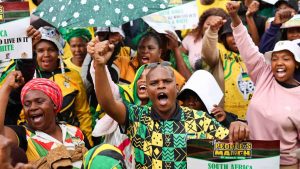
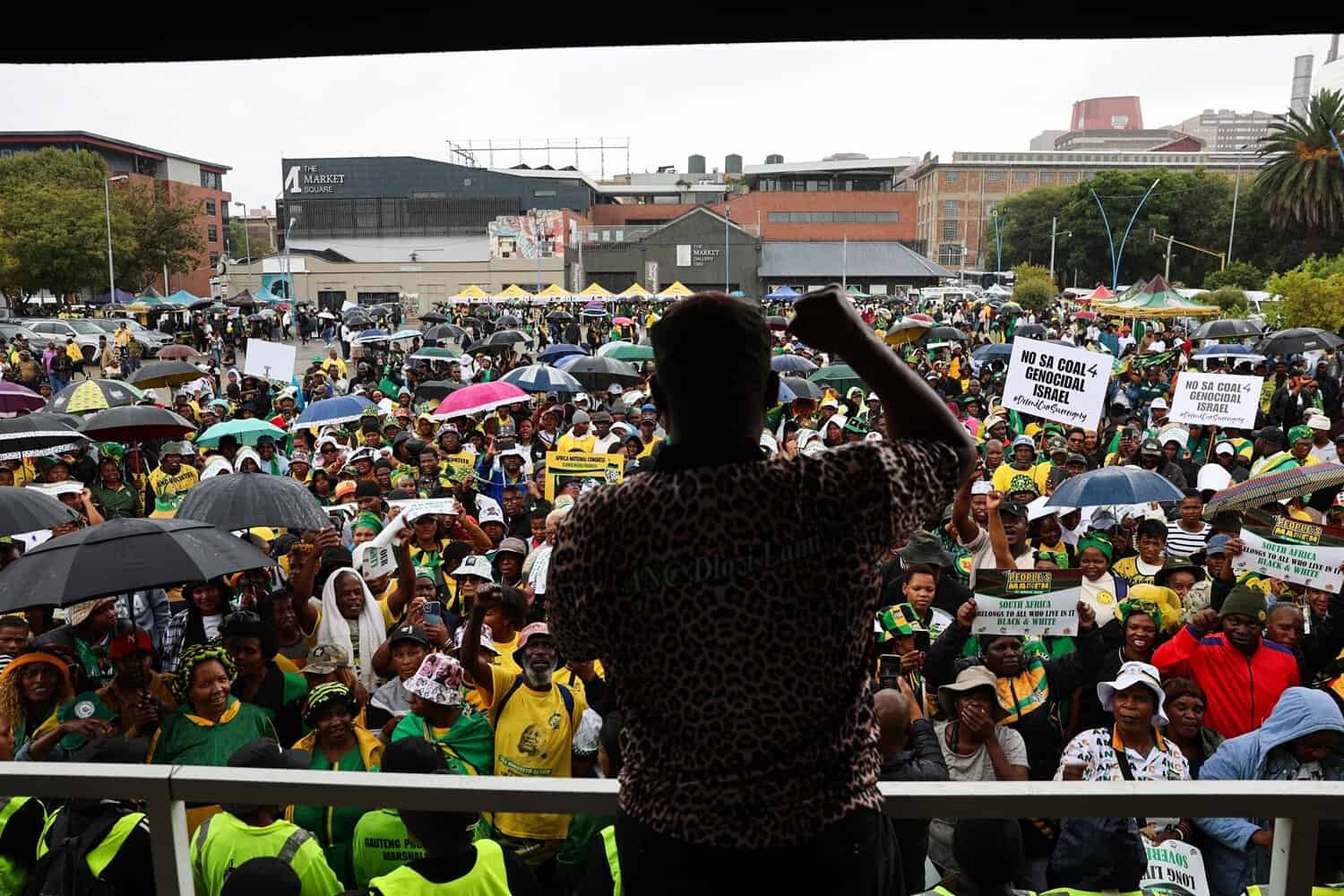
On Saturday, the ANC took to the streets of Joburg, Durban, Cape Town and East London. This was under the banner of the “People’s March: In Defence of Our Sovereignty and Democratic Gains”.
The slogans were bold: #SAWillNotBeBullied, #DefendOurSovereignty. The target was, however, vague: “External bullying”, foreign critics, unnamed forces seeking to undermine the nation.
But to understand why the ANC must summon the nation against vague foreign threats, one must first understand the current political landscape.
The ANC entered the government of national unity in 2024, having lost its parliamentary majority for the first time since 1994. This electoral decline reflects deeper trends: 32 years of governance have produced undeniable failures in service delivery, economic management and institutional integrity.
Unemployment remains endemic. Infrastructure deteriorates. Crime persists. Corruption, despite periodic anti-graft campaigns, continues unabated. It is against this backdrop that the march must be understood.
Deflecting
By invoking “external bullying” and positioning the march as a “defence of sovereignty”, the ANC attempts to accomplish several objectives simultaneously.
First, the ANC wants to divert attention from being held accountable for corruption. When ANC leaders are exposed for corruption, they will divert attention by claiming they are being attacked not because of their actions, but because they defend the country’s sovereignty.
They become targets of a foreign agenda, victims of forces that want to see South Africa fail or champions against white monopoly capital. It is the old victimhood playbook by those running away from accountability.
The march was also an attempt to manufacture national unity around a threat that is, at best, peripheral to most South Africans’ lived experience. Foreign criticism of South African policy, whether regarding land reform, human rights, or Iran and Palestine, does not supersede the ANC’s comprehensive failure to govern and hold itself accountable.
After three decades in power, the party presides over rampant looting, unemployment at catastrophic levels, infrastructure in advanced decay, service delivery in collapse, and a citizenry abandoned to crime and violence.
These are not man-made criticisms by “agent provocateurs”, they are the logical outcome of corrupted cadre deployment, looting of state coffers, and institutional hollowing out. They had an internal party function. In an era of diminished resources and eroding support, mass mobilisation reinforces organisational cohesion.
It demonstrates that the party can still fill the streets, even if it cannot fill potholes or provide water for citizens, because the comrades have stolen the money.
It projects strength to allies and opponents alike. It reminds the faithful why they remain faithful. Then there is the question of resources.
ALSO READ: Mbalula: They must prove the ANC got money from Iran
Who paid?
The ANC is, by multiple accounts, financially strained. Membership fees have declined. Donor interest has waned. Internal debts accumulate. The party has struggled to fund even modest local election campaigns.
Yet suddenly, a national multi-city march materialises. Who paid? Official statements reference a “collective national movement”, implying contributions from alliance partners like Cosatu and the SA Communist Party, perhaps in-kind support from sympathetic businesses.
The more plausible explanation is that the ANC scraped together dwindling internal resources for this spectacle. But why spend scarce funds on a symbolic street show when those same resources could address the material crises devastating the party’s own constituency?
A fight for survival
A liberation movement that once commanded moral authority now finds itself fighting for political survival. The moral authority of the struggle era has been spent, looted along with state funds.
On Human Rights Day, the mostly poor marchers who have had no water, electricity or food marched toe-to-toe with those who should be questioned and prosecuted for state capture and brazen looting of resources.
The poor marched with the very people who deny them water. They marched with those who ensure their children receive no quality education.
They marched with the architects of a health care system that offers them no medicine, no dignity, no care.
They marched with the creators of the unsafe streets, fuelled by drugs and violence, the collapsing infrastructure, and the abandoned communities.
They marched with the new oppressor.
Having exhausted its capacity to deliver, the ANC is now perfecting the art of deflection. The comrades who steal money meant for water and health care, just basic amenities for their own people, have now become experts in sovereignty and saving other people and countries.
The leaders who cannot account for billions worth of tenders have become champions against imperialism.
The march changed no policy, delivered no service, and held no one accountable. But it did create the illusion of relevance for a party that has lost its way, legitimacy, integrity, and credibility.
NOW READ: ANC refutes allegations of Russian interference in elections