HEALTH INEQUITY: Red Cross Children’s Hospital doctor using donated ‘miracle’ cystic fibrosis drug to save lives

When Jaylin Leitjies was six months old, he became very ill, his body weak and his breathing laboured. His mother, Ellen-Lee Leitjies, rushed him to Red Cross Children’s Hospital in Cape Town, fearful that he would not survive. After extensive testing, it was found that Jaylin had cystic fibrosis, a rare genetic condition that causes damage to the lungs, digestive system and other organs in the body.
Even with the correct diagnosis, Jaylin ended up spending most of his time between 6 and 18 months old in the intensive care unit (ICU) at the hospital. It marked an incredibly difficult period for his family.
“In ICU, Jaylin had three no-heartbeats. They were telling me that they can do nothing for him… [but] when they did the treatment for the cystic fibrosis, he started getting better. We were discharged after a while, and came home,” said Ellen-Lee.
However, over the next few years Jaylin would be admitted to hospital every few months with severe chest infections, linked to the vulnerabilities that come with his condition.
Ellen-Lee feared to let him out of the front door of their home in Mitchells Plain, terrified of the risks the outside world represented for her son. His doctor, Red Cross paediatric pulmonologist Dr Marco Zampoli, was concerned that the young boy would not live to see his tenth birthday.
“Jaylin was on a pathway to certain death in the next few years… because he had such a bad start. He was diagnosed, literally, on an ICU ventilator… By then, his lungs really took a big hit and he was very malnourished. He was brought back from the brink,” said Zampoli.
Everything changed when Jaylin was five years old. He was placed on a life-saving cystic fibrosis medication called Trikafta, with results that shifted his prognosis almost immediately.
“Ever since Jaylin was put on the Trikafta, he has been a different person. His weight is good, his health is good. His development is just going… It’s a miracle since he was put on the treatment,” said Ellen-Lee.
Jaylin, now seven years old, has not been admitted to hospital since he was placed on Trikafta.
But the future of his access to the medication is in no way certain. Trikafta is not currently available through SA’s public health system, and Ellen-Lee, a widowed 24-year-old mother with no employment, cannot afford the costs involved in accessing it through medical aid.
So, how was Jaylin saved?
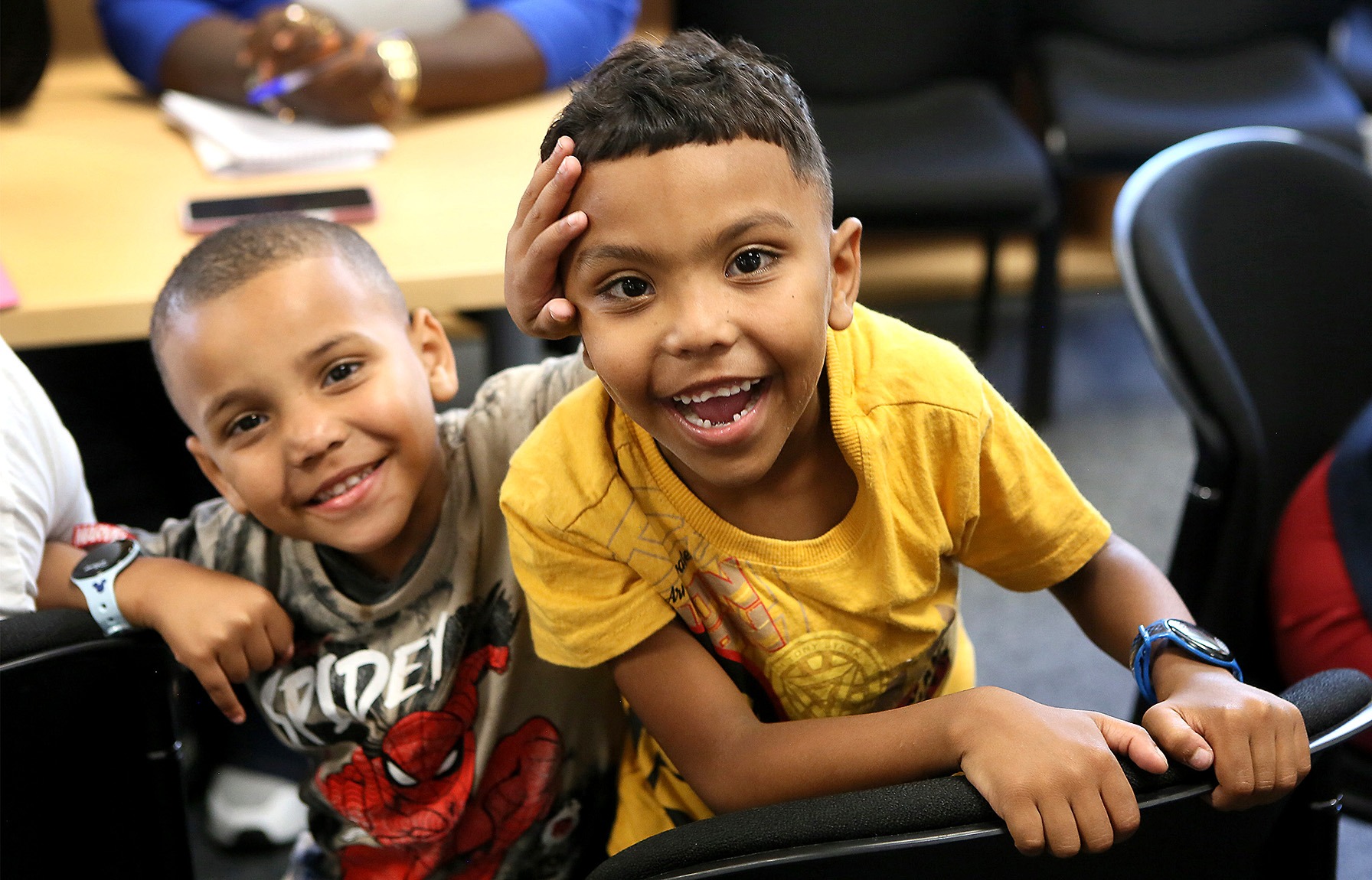
Ellen-Lee Leitjies (centre) with her two young sons, Justin and Jaylin, at Red Cross War Memorial Children’s Hospital in Cape Town on 5 March 2026. Justin and Jaylin are living with cystic fibrosis. (Photo: Ruvan Boshoff / Pace University Centre for Global Health) The fight for TrikaftaTo understand the complex process of getting Jaylin on the treatment that changed his life, some background on Trikafta’s controversial history in SA is needed.
The drug is produced by American biopharmaceutical company Vertex Pharmaceuticals, and was registered in the United States in 2019. It was heralded as a game-changer in cystic fibrosis care, significantly boosting lung function, wellbeing and life expectancy in eligible patients.
It also went to market at an eye-wateringly high cost. In 2024, Spotlight reported that the US list price for the drug was more than $300,000 per person per year.
In South Africa, Trikafta was very difficult to attain. While Vertex held the patent on the medication in the country, it did not register it with the South African Health Products Regulatory Authority (Sahpra) or identify a local distributor that could import it.
A cheaper generic was available in Argentina, but could not be imported due to patent laws. To circumvent these, South African cystic fibrosis patients with financial means would travel to Argentina with empty suitcases, bringing back a limited supply of the drug, according to Zampoli.
In 2023, local cystic fibrosis patient Cheri Nel took Vertex Pharmaceuticals to court, seeking an order from the Gauteng Division of the High Court in Pretoria granting a compulsory licence to allow generic versions of Trikafta to be imported into SA. She argued that Vertex was abusing its patents in the country by refusing to make its drug available on reasonable terms, while also blocking other manufacturers from supplying alternatives, according to Spotlight.
The potentially landmark case was dropped in 2024, after the pharmaceutical company reached a settlement with Nel and her co-applicants.
Vertex formed an agreement with the company Equity Pharmaceuticals to import and distribute Trikafta in SA, with the full recommended dose available to eligible patients with cystic fibrosis who were on top-end medical aids such as Discovery Health Comprehensive Plans.
“In the private sector, medical aids pay R33,000 per month per patient as contribution in a co-pay scheme through a treatment access programme, where the actual cost per month of Trikafta is R173,615 per month,” Zampoli told Daily Maverick, adding that cystic fibrosis was not a prescribed minimum benefit condition, further hindering medication access.
Dr Marco Zampoli, paediatric pulmonologist and head of the paediatric cystic fibrosis clinic at Red Cross War Memorial Children’s Hospital, has been working to improve access to the life-changing cystic fibrosis medication Trikafta for public sector patients. (Photo: Ruvan Boshoff / Pace University Centre for Global Health) As the drug is still not registered with the SA Health Products Regulatory Authority, doctors seeking to prescribe Trikafta need to get Section 21 approval from the regulatory body every six months for every patient receiving it.
However, the Vertex settlement agreement did not change access to the drug for patients in the public sector, or those on other medical aid schemes, according to Kelly du Plessis, founder and CEO of Rare Diseases South Africa.
There are about 550 people on the cystic fibrosis registry in the country, according to Du Plessis. However, she noted that this represented just a fraction of those actually living with the condition, due to low diagnosis rates, lack of awareness and limited testing for rural and indigent patients.
Zampoli estimated that while there were about 400 to 450 cystic fibrosis patients in SA who would benefit from receiving Trikafta, only about half of this number were currently on it, due to limited access to the necessary medical aid schemes.
Reflecting on the barriers to obtaining the drug, he said: “First is the cost of Trikafta, for which we do not know the price in the public sector as Vertex has been unwilling to come back to us with a fair price… Second, Trikafta is not registered in SA with the Health Products Regulatory Authority, thus we need to get Section 21 approval every six months for every patient. Government sector procurement regulation makes it difficult to procure drugs that are not registered in SA.”
Saving Jaylin LeitjiesSo, how are patients like Jaylin able to access Trikafta?
It comes down to the hard work of doctors like Zampoli, who have come up with a drug-sharing strategy for those with an urgent need in the public sector.
There are cystic fibrosis patients on medical aid plans who receive the full dose of Trikafta. In this cohort, there are some who experience side effects from the drug, leading them to reduce the dose taken each month. These patients have an agreement with Zampoli and his colleagues whereby they donate their surplus medication for use in the public health system.
Combining Trikafta with a second medication, the common antibiotic clarithromycin, slows the breakdown of the drug by the liver, allowing its effects to last longer. This has allowed Zampoli to spread the donated Trikafta supply among a greater number of state sector patients, prescribing twice-weekly doses rather than the recommended daily intake.
“We have about 100 children [living with cystic fibrosis] at Red Cross Hospital. About 30 are on medical aid and getting [Trikafta] on the full dose. I’ve got about 10 kids on this donated medication scheme,” said Zampoli.
Other hospitals where the drug-sharing strategy is being used include Groote Schuur Hospital, where 12 public sector patients are benefitting, and Tygerberg Hospital, where one is benefitting.
The limited supply of donated Trikafta at these health facilities means the doctors involved in its distribution have to make tough decisions. Who gets prioritised for access?
“I’m privileged enough that I have access to some donated stock. And so we really struggled. Who are we going to treat? Logically, we aim for the sickest ones. Jaylin was one of them,” said Zampoli.
Jaylin’s younger brother, Justin Leitjies (5), is also living with cystic fibrosis. He is not on Trikafta. Justin was diagnosed earlier in his life, meaning he was treated for the condition from birth and is much healthier than his brother. His case is not urgent enough to warrant access to the donated drug supplies.
However, Zampoli said that if the cost was not a barrier, he would have all eligible cystic fibrosis patients on Trikafta.
“You want to treat it early, before the disease actually starts scarring organs. The earlier you get in there, the better you protect,” he said.
Even for those patients who do get access to the donated Trikafta, there are no long-term guarantees.
“Obviously, we don’t have an endless supply. We have to be cautious. It may dry up one day,” said Zampoli.
Looking aheadRare Diseases South Africa is of the view that treatments for rare conditions should be evaluated on a countrywide basis, and not in relation to socioeconomic factors, according to Du Plessis.
“We understand that financial constraints do not currently allow for all patients to receive treatment. However, we need to work towards developing access solutions that are equitable across both private and public sectors,” she said.
“Rare Diseases SA is engaged with various stakeholders, including the industry and the South African Cystic Fibrosis Association, and continues to seek out opportunities that will advance access to [cystic fibrosis] treatment within SA.”
Zampoli told Daily Maverick that he had approached the national Department of Health about considering the inclusion of Trikafta on the country’s Essential Medicines List, but “their hands are tied if Trikafta is not registered with the SA Health Products Regulatory Authority”.
“For now, procurement of Trikafta is up to individual health facilities through their respective Pharmacy and Therapeutic Committees (PTCs), or provincial PTCs. However, because Vertex has not got back to us with any price offer that is reasonable, we are unable to approach any PTCs as costing is key,” he said.
“Vertex has donation programmes in other countries like Egypt, Tunisia, Lebanon and Morocco, but they refuse to donate to SA as their determination is that SA should pay.”
From Vertex PharmaceuticalsVertex Pharmaceuticals said that more than 420 people living with cystic fibrosis in SA were benefitting from its “triple combination therapy” via the Section 21 pathway for accessing the medication.
“We focused on this pathway first as it is the quickest way to secure access in SA, requiring no registration. Through this access model, eligible patients receive treatment with no personal co-payment. When determining access to a medicine in any country, we consider through dialogue with authorities the overall budget impact based on financial circumstances, healthcare system impacts and [cystic fibrosis] epidemiology,” said the Vertex spokesperson.
When asked about the cost of Trikafta in SA, the spokesperson referred Daily Maverick to private health insurers for funding details.
According to Vertex, while it is continuing to “evaluate the SA Health Products Regulatory Authority registration pathway”, it believes that a licence application would not speed up broad reimbursement in SA, “given the country’s challenging reimbursement system”.
“Most novel, high-value medicines for rare diseases, even if approved, don’t make it onto the Prescribed Minimum Benefits list or Essential Medicines List, leaving them historically inaccessible to most patients despite regulatory approval. The fastest and most efficient route to sustainable access is via Section 21 authorisation (on a named patient basis), which does not require lengthy regulatory filings and which we plan to extend to the public sector,” said the spokesperson.
The Vertex spokesperson added that getting a rare disease medicine funded via the public sector was a complex process, before expressing the company’s commitment to finding a sustainable and safe solution as soon as possible.
“We remain committed to working collaboratively with local stakeholders to make this a reality,” said the spokesperson. DM