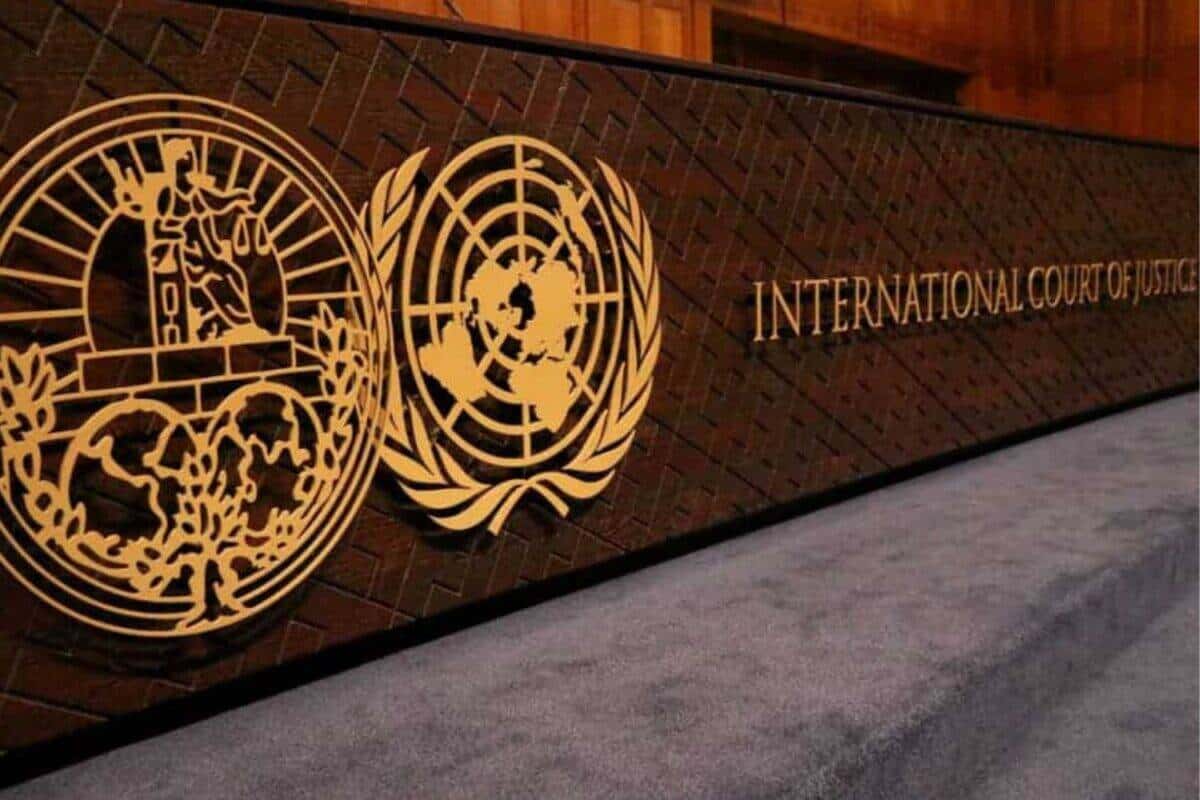
US intervention escalates SA’s genocide case against Israel

The ICJ proceedings could shape global legal standards on genocide.
South Africa’s genocide case against Israel at the International Court of Justice (ICJ) has escalated into a global showdown, with the US formally intervening to defend its ally.
Washington’s declaration of intervention signals the SA government will not be easily swayed, despite mounting pressure, and sets the stage for a highstakes legal and political battle.
Analysts see geopolitical pressure behind US intervention
Analysts believe the US move is a clear indication that Israel has an undue influence on the US, as it managed to drag Washington into the case, as it did in the ongoing Israel-US versus Iran war in the Middle East.
Independent political analyst Goodenough Mashego said the US and Israel had hoped that by now South Africa would have withdrawn the case as a result of pressure from Washington.
Israel had delayed its response to the South African submission at the ICJ because it hoped there would be no need to proceed, Mashego said.
Last week, the US filed a “declaration of intervention”, aiming to prevent a finding of genocide against its ally.
ALSO READ: Israel files delayed ICJ response as Gaza crisis deepens
Legal arguments centre on genocide convention interpretation
The declaration was filed under Article 63 of the ICJ Statute, which allows parties to a treaty [the Genocide Convention] to intervene and present their interpretation of that treaty.
The Trump administration, in an 11-page document, strongly stated the allegations of genocide against Israel are “false” and that Israel lacked “specific intent” to commit genocide as required to establish genocide under the 1948 Genocide Convention.
It further said, referring to the Israel attacks in Gaza for which South Africa laid a complaint at the ICJ, that civilian casualties in urban warfare do not automatically equate to genocidal intent.
Furthermore, Washington said the charges by South Africa served to “delegitimise the State of Israel” and that the ICJ case is part of a broader campaign against the country.
Genocidal intent
A ruling against Israel could undermine international law and “lower the standard” required to establish genocidal intent.
Mashego said there was overwhelming evidence of genocide reinforced by the fact that the UN Human Rights Committee had already declared the intent of genocide had existed in Gaza.
He doubted whether the countries that intended to back Israel would proceed after the UN declaration, given the Israeli actions in Gaza in reaction to the October, 2023, Hamas attacks, to date.
Mashego expected the ICJ ruling on the Israel genocide case during the second half of the year.
ALSO READ: Israel retaliates after Pretoria declares chargé d’affaires persona non grata
Western allies reassess positions amid Gaza war
He said the ICJ findings are binding, as was the case with Britain’s departure from Diego Garcia island after the ICJ ruling, which found the territory was illegally occupied.
The Western countries that initially backed Tel Aviv include Germany, Canada, the Czech Republic, France, and others like Australia, Denmark and Italy, which highlight Israel’s right to defend itself.
Following Israel’s intensification of attacks and blockading humanitarian aid into Gaza, many Western nations changed their minds and decided between 2024 and 2025 to recognise Palestine as a sovereign state.
Those included Spain, Ireland, Norway, Slovenia, Australia, Canada, the UK, France and Portugal. Political analyst Dirk Kotzé said by defending Israel at the ICJ, the US is doing in court what is has done in the war in the Middle East.
The war against Iran was not a US war, but Washington was fighting on Israeli’s behalf.
“So the US intervention in ICJ follows the same logic: they are supporting Israel against South Africa,” Kotzé said.
NOW READ: Danish Supreme Court case opens on arms sales to Israel